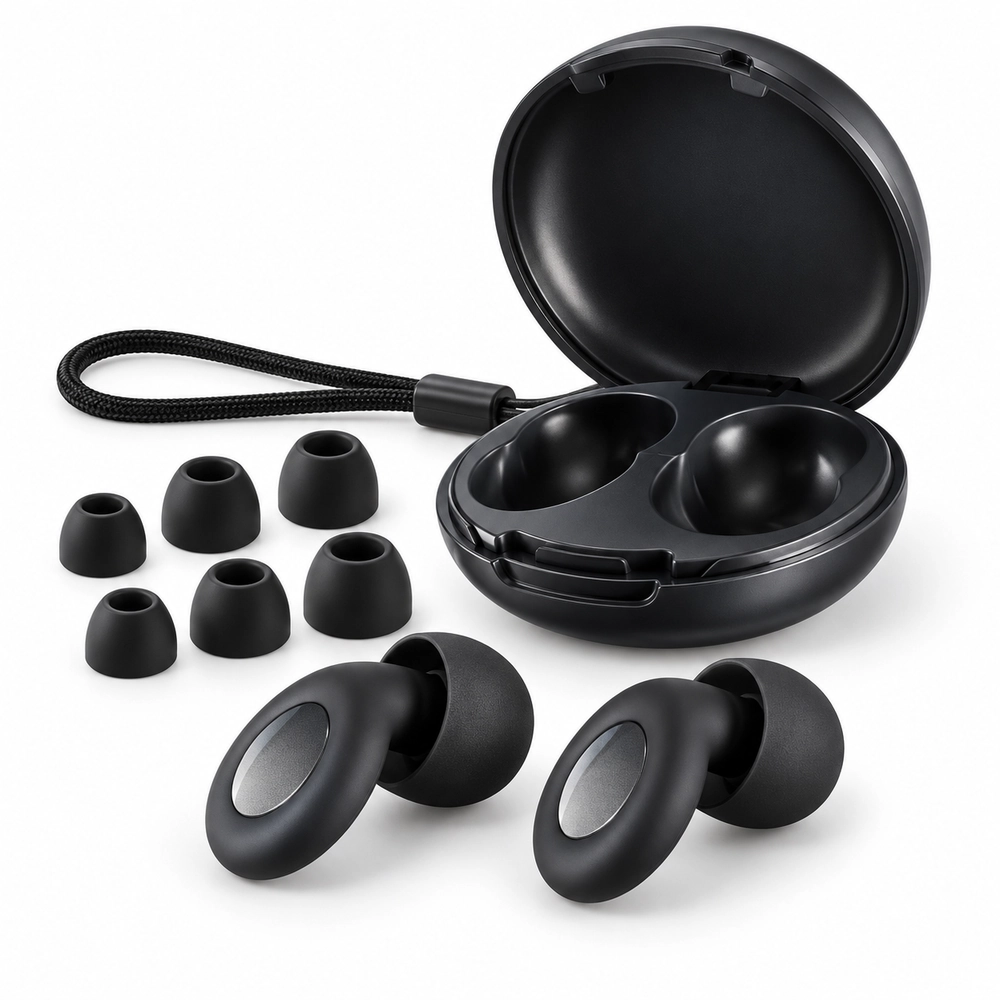
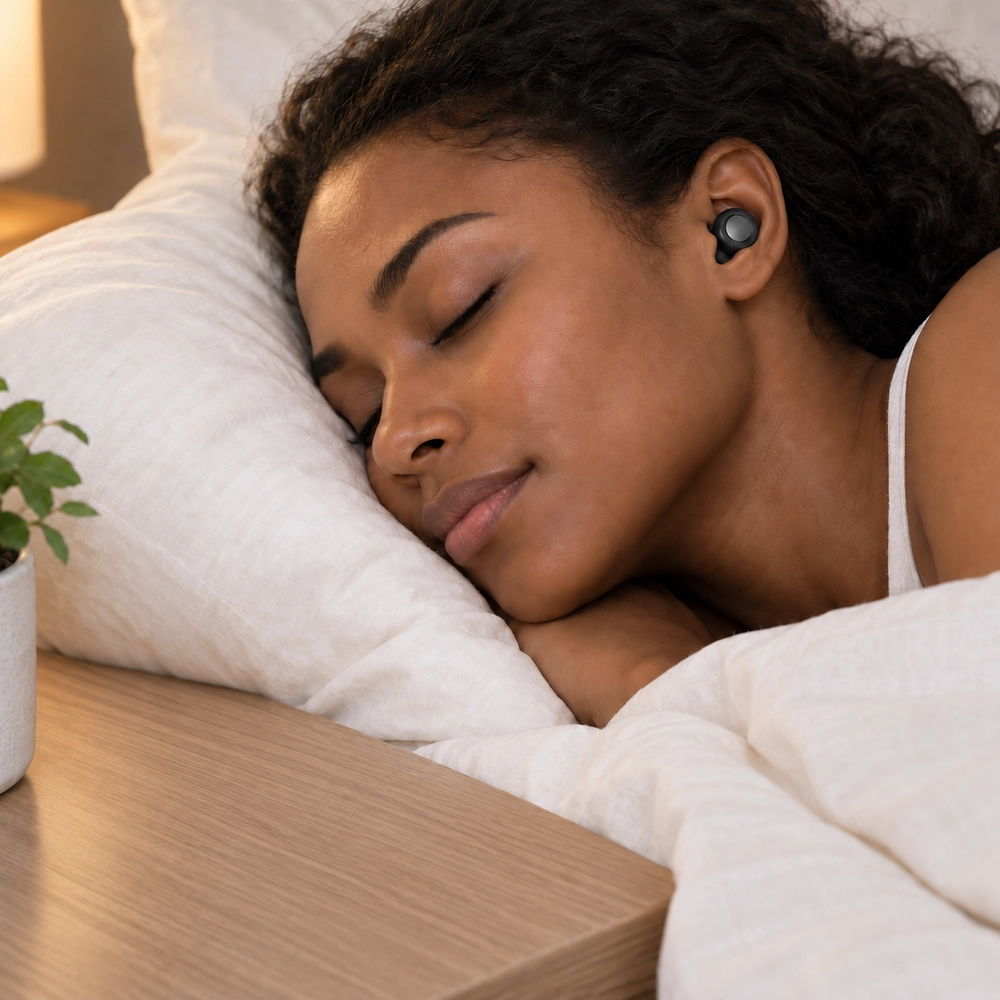
Reusable earplugs with interchangeable ear tips help soften everyday noise.
WHY THIS WORKS
Find Your Fit for a Little More Quiet
WHAT MAKES IT DIFFERENT
Choose the Tip That Fits
WHAT'S IN THE BOX
What comes with it?
SPECS
What are the product details?
SIMPLE SCIENCE
A seal reduces the sound path
TRUST BADGES
At a glance
SAFETY REASSURANCES
What should I check before ordering?
✓Selected
The Quiet
Reusable Noise-Reducing Sleep Earplugs
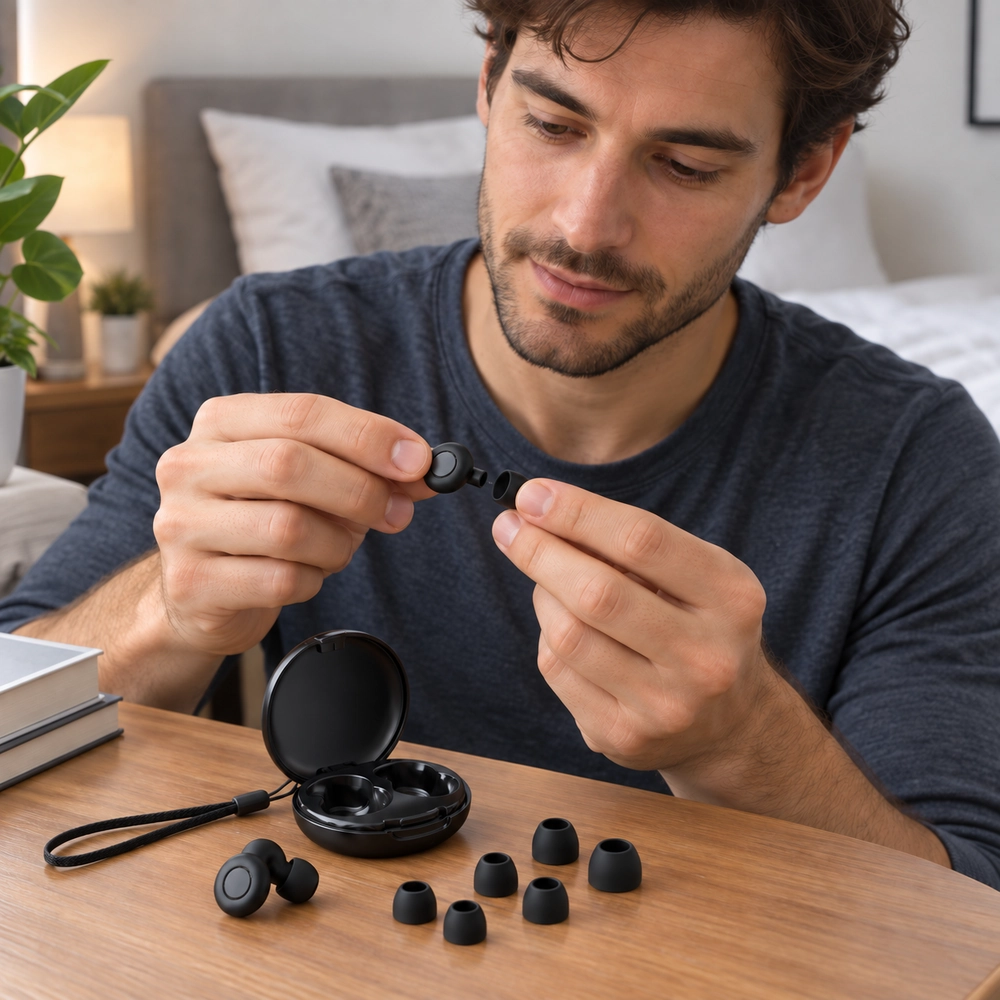
Choose the ear-tip size that sits comfortably and securely. These reduce surrounding sound; they do not make every environment silent.
A well-fitting ear tip creates a physical barrier at the ear opening, reducing the airborne sound entering through it. Gaps around the tip let more sound through, which is why fit matters.
Black reusable noise-reducing earplugs.
Interchangeable ear tips for adjusting fit.
Black reusable noise-reducing earplugs.
Interchangeable ear tips for adjusting fit.
Rather than relying on one fixed ear-tip size, try the interchangeable tips for a comfortable fit. Keep the reusable earplugs ready for work, rest or quiet time.
The selected noise-reducing earplugs with interchangeable ear tips.
Choose the ear tips that sit comfortably and securely, then use the earplugs when you want less surrounding noise during work, rest or quiet time.
Softens echo and reflected sound inside the room with sound-absorbing wall coverage.
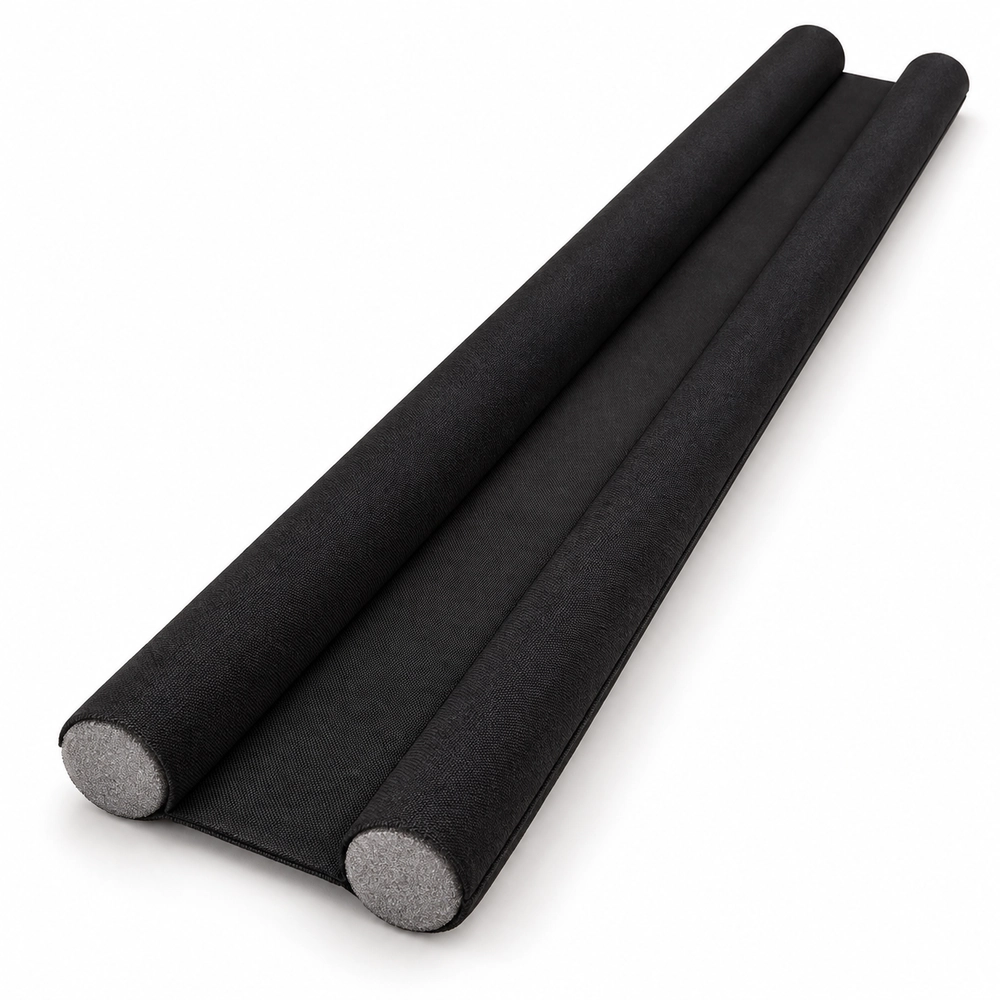
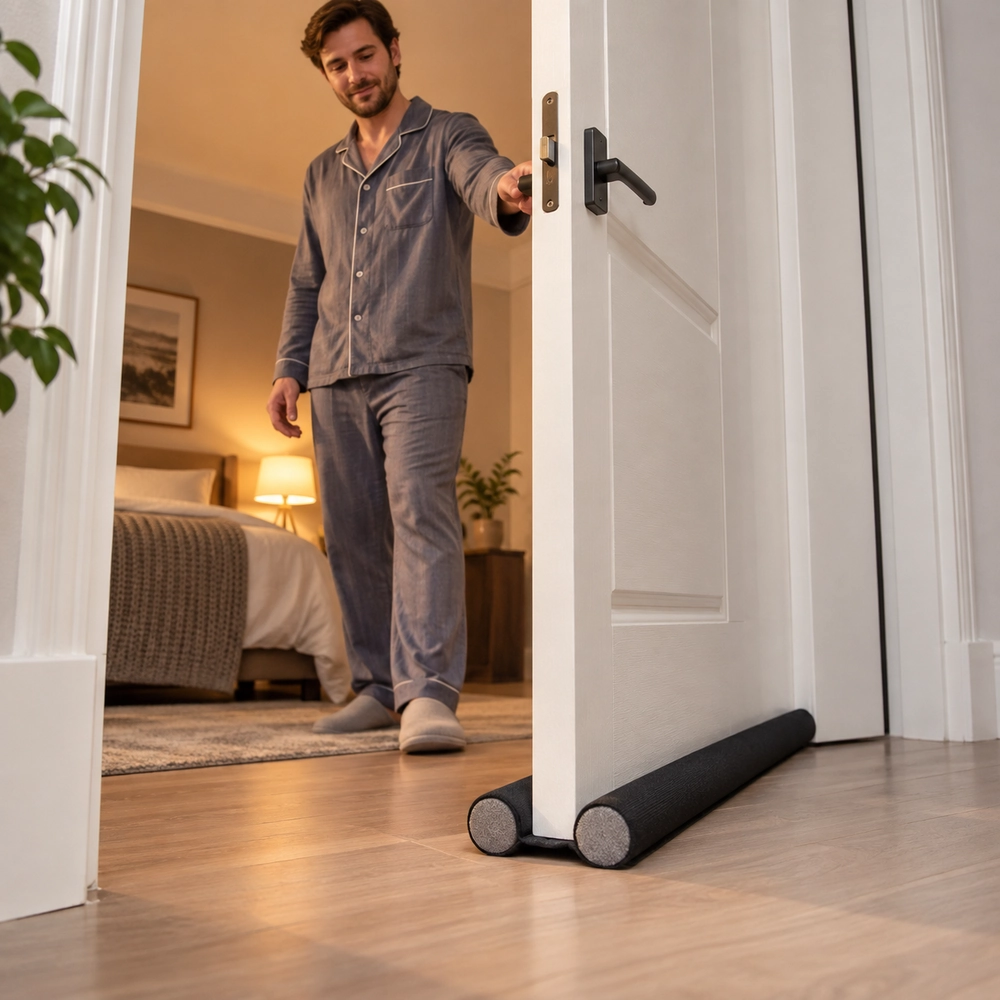
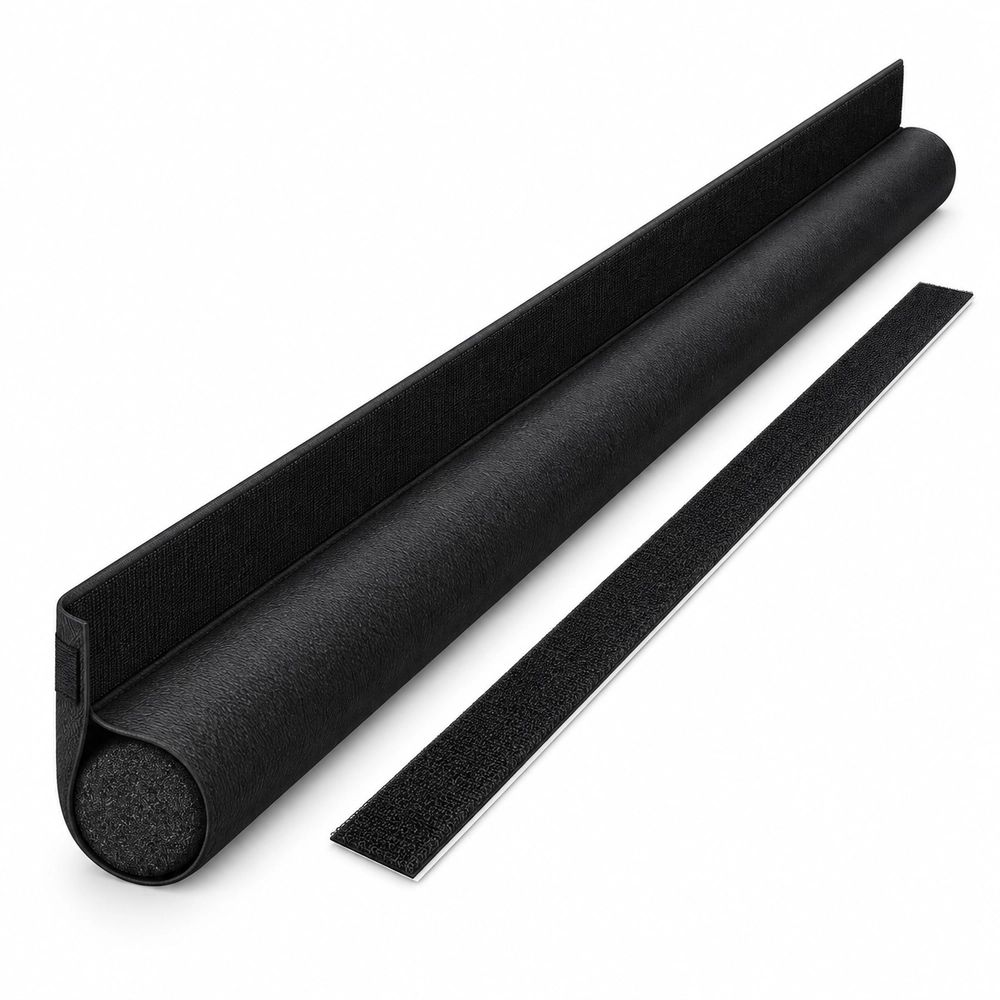
Cover the opening beneath a suitable door to help limit the draft, light and sound passing underneath.
WHY THIS WORKS
Close the gap beneath the door
WHAT MAKES IT DIFFERENT
Target the space the door leaves open
WHAT'S IN THE BOX
What comes with it?
SPECS
What are the product details?
SIMPLE SCIENCE
Fill the opening beneath the door
TRUST BADGES
At a glance
SAFETY REASSURANCES
What should I check before ordering?
✓Selected
The Floor Seal
Under-Door Sound Seal
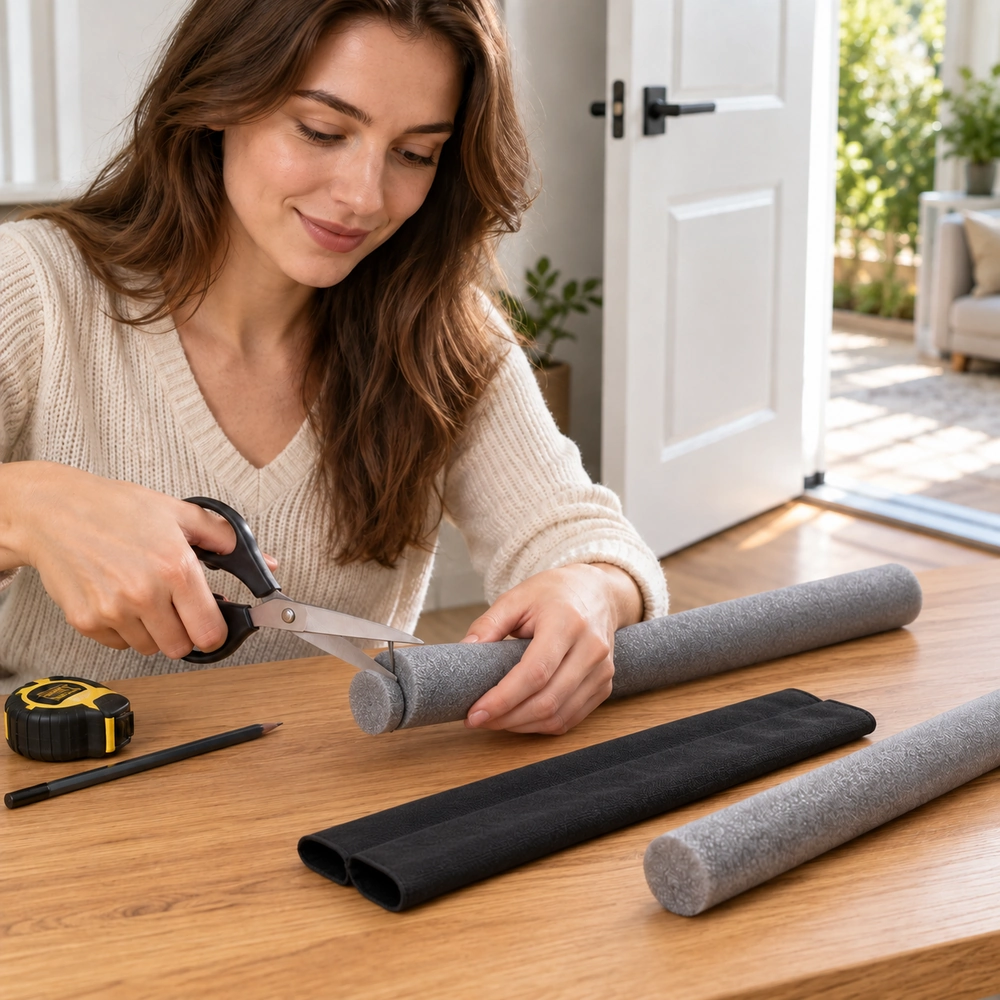
Compare the approximately 93 cm length with your door width, and make sure the door can still move freely over your flooring.
The foam occupies the gap between a compatible door and the floor. Closing that opening obstructs air, light and some sound travelling directly underneath; other gaps can still let them through.
Color: Black.
Size: Approximately 93 × 10 cm.
Core material: EVA foam.
Foam-core door-bottom seal.
Approximately 93 cm long.
Covers a suitable gap beneath the door.
Closing the door does not close the gap beneath it. This seal covers that floor-level opening instead of adding something across the whole doorway.
Included: One under-door seal.
Cover the floor-level opening that leaves a closed door feeling unfinished. The foam seal sits at the bottom of a compatible door.
Closes the largest door gap to reduce sound entering beneath it.
Close suitable gaps around the frame with adhesive foam, helping reduce the sound and drafts that pass through them.
WHY THIS WORKS
Take the edge off door-gap noise
WHAT MAKES IT DIFFERENT
Work on the gap, not the whole room
WHAT'S IN THE BOX
What comes with it?
SPECS
What are the product details?
SIMPLE SCIENCE
Close the route sound can pass through
TRUST BADGES
At a glance
SAFETY REASSURANCES
What should I check before ordering?
✓Selected
The Frame Seal
Door Frame Sound Seal
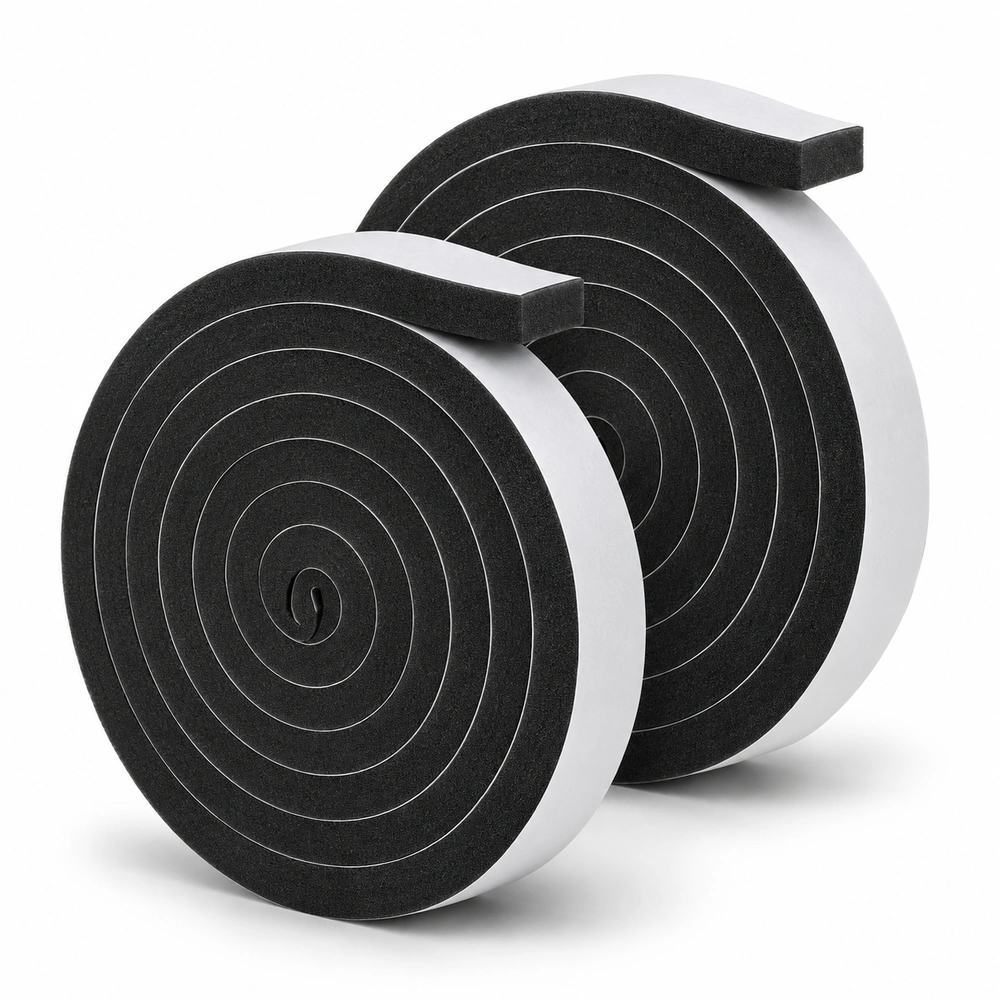
Measure the door-frame edges and closing clearance against the 15 mm × 10 mm strip. This seal is for the frame edges, not the bottom of the door.
An open door-frame gap leaves an air path for sound. Compressible foam closes part of that path when correctly fitted, helping reduce sound passing through the gap rather than soundproofing the whole room.
Color: Black.
Material: Adhesive foam.
Strip size: 15 mm wide × 10 mm thick.
Placement: Door-frame edges.
Strip size: 15 mm wide × 10 mm thick.
Placement: Door-frame edges.
You may not need to rethink the room to address an open door-frame gap. A fitted foam strip targets that specific opening while leaving the doorway usable.
Included: Two rolls, 2 m each; 4 m total.
Give sound fewer open gaps around the frame to pass through. The adhesive foam fits along suitable door-frame edges without covering the doorway.
Seals narrow perimeter gaps where sound leaks around the door frame.
Light, noise, and temperature send “stay alert” signals your brain can’t ignore. Your body never enters the first sleep stage because it thinks the environment isn’t safe.
How You Shut Those Signals Down
Total darkness boosts melatonin.
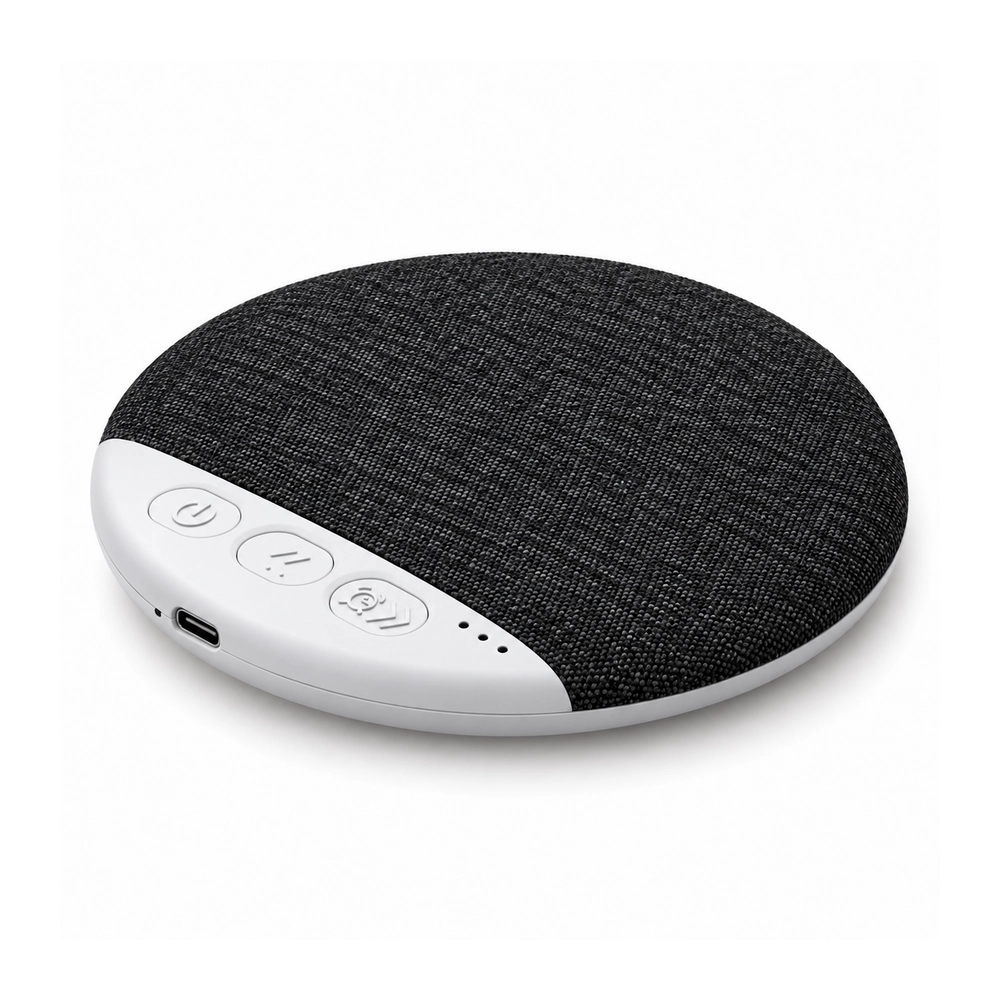
Steady sound prevents cortisol spikes.
Cooling triggers your natural sleep switch.
These remove the exact triggers blocking sleep.
What Happens When Your Brain Finally Lets Go
Your system stops scanning the room.
Stress hormones drop.
Thoughts slow.
Your body slips into real sleep instead of fighting it.